
 By Matthew Sullivan
The error message “keine karriere-subdomain gefunden” has recently become a trending search query, especially among website owners, developers, HR teams, and job seekers. In English, this phrase means “no career subdomain found” It usually appears when a website cannot locate or load its career-related subdomain properly.
Many companies use separate subdomains for recruitment pages, such as careers.company.com or jobs.company.com. When those subdomains are missing, broken, or incorrectly configured, users may encounter this error. While it may look like a small technical issue, it can negatively affect SEO, user experience, and even job applications.
In this guide, you will learn what “keine karriere-subdomain gefunden” means, why it happens, and how to fix it properly.
What Does Keine Karriere-Subdomain Gefunden Mean?
The phrase “keine karriere-subdomain gefunden” is German. Translated into English, it means “no career subdomain found” This error usually appears when a system tries to access a careers section on a website but fails to locate the associated subdomain.
A career subdomain is a separate section of a website dedicated to recruitment or hiring. Common examples include:
- careers.company.com
- jobs.company.com
- karriere.company.de
Companies often separate career pages from their main websites to improve organization and manage recruitment systems more efficiently.
Why Companies Use Career Subdomains
Businesses use career subdomains for several reasons. One major reason is integration with Applicant Tracking Systems (ATS). Many HR tools require separate hosting environments or subdomains to function correctly.
Career subdomains also help companies maintain branding consistency while improving scalability. From an SEO perspective, dedicated recruitment pages can target job-related keywords more effectively and improve visibility in search engines.
Why This Error Happens
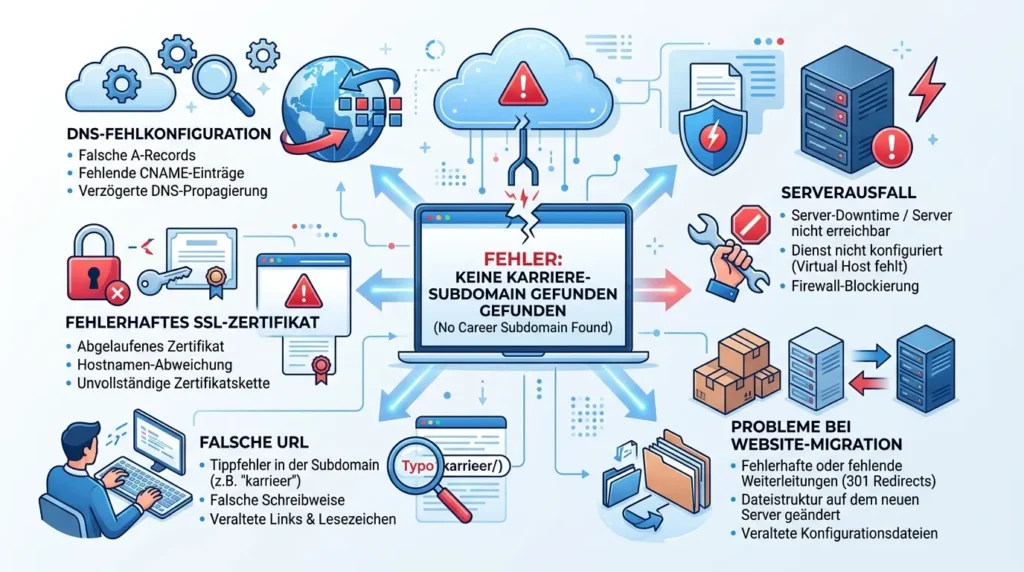
There are multiple reasons why the “keine karriere-subdomain gefunden” error appears. Understanding the root cause is the first step toward fixing it.
Missing DNS Records
DNS records help connect domain names to servers. If the DNS records for the career subdomain are missing, browsers cannot locate the page.
For example, if careers.example.com does not have a proper A record or CNAME record, the website may fail to load.
Incorrect CNAME or A Record Configuration
Even if DNS records exist, incorrect values can still create issues. A typo in the IP address or wrong destination server may prevent the subdomain from functioning correctly.
Expired or Broken SSL Certificates
SSL certificates secure websites using HTTPS. If the SSL certificate for the career subdomain expires or becomes invalid, browsers may block access to the page.
Some systems interpret SSL issues as a missing subdomain problem.
Website Migration Problems
During website redesigns or migrations, developers sometimes forget to move subdomains properly. This can lead to broken career pages and DNS mismatches.
Server Misconfiguration
Server settings may block the career subdomain accidentally. Apache, NGINX, or hosting configurations must correctly recognize the subdomain.
Deleted or Uncreated Subdomain
Sometimes the subdomain was never created in the first place. In other cases, it may have been deleted unintentionally during hosting updates.
DNS Propagation Delays
When DNS changes are made, they can take several hours to fully propagate worldwide. During this period, users may temporarily see the error.
Wrong URL or Typographical Errors
Simple typing mistakes can also trigger the issue. Users may enter the wrong URL or click outdated links that point to nonexistent career pages.
How to Fix Keine Karriere-Subdomain Gefunden
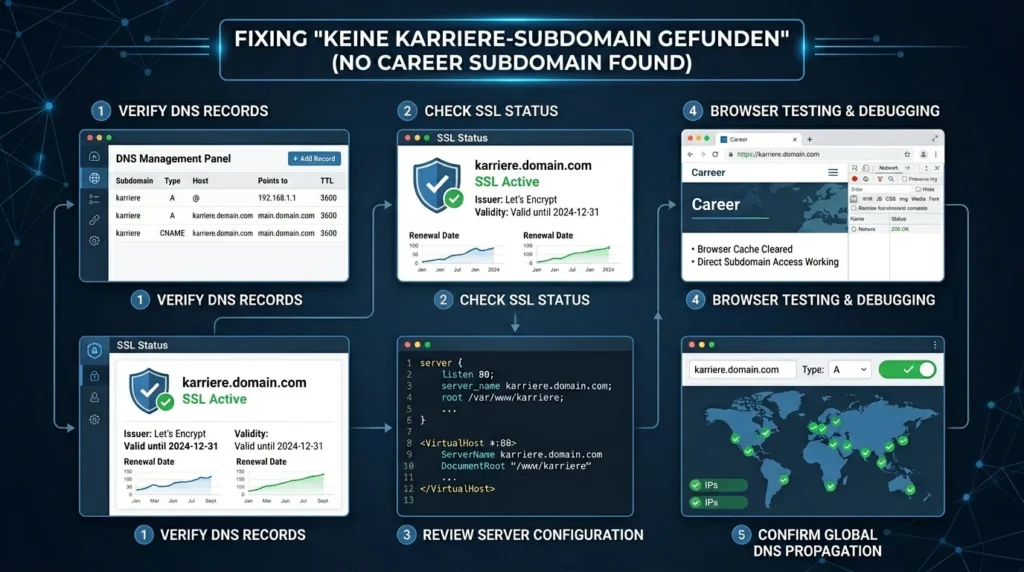
Fixing this error requires a systematic approach. Below are the most effective solutions.
Step 1: Check If the Subdomain Exists
Start by confirming whether the subdomain actually exists. You can do this by typing the subdomain directly into a browser.
If the page does not load, check your hosting dashboard or domain provider settings.
Step 2: Verify DNS Settings
Review the DNS records associated with the career subdomain.
Check whether:
- The A record points to the correct server IP
- The CNAME record targets the correct domain
- There are no duplicate or conflicting records
DNS management panels from Cloudflare, GoDaddy, or Namecheap can help with this process.
Step 3: Check Hosting and Server Configuration
Make sure the hosting server recognizes the career subdomain. Sometimes the DNS records are correct, but the server itself is not configured properly.
Review:
- Apache virtual hosts
- NGINX server blocks
- Hosting control panel settings
Step 4: Validate SSL Certificates
Use an SSL checker tool to confirm the certificate is valid for the career subdomain.
If necessary:
- Renew the certificate
- Reinstall SSL properly
- Enable wildcard SSL support
Step 5: Clear DNS Cache
Local DNS caches may store outdated information.
On Windows, you can clear the DNS cache using:ipconfig /flushdns
Mac and Linux users can clear DNS cache using terminal commands specific to their systems.
Step 6: Test on Multiple Devices and Browsers
Sometimes browser extensions or cached files cause issues. Test the website using:
- Another browser
- Incognito mode
- Another internet connection
- Mobile devices
Step 7: Check DNS Propagation Status
Use online tools like WhatsMyDNS to confirm whether DNS updates have propagated globally.
If the changes are still propagating, waiting a few hours may solve the problem automatically.
Step 8: Configure Proper Redirects
If the old career subdomain has changed, configure 301 redirects to guide users to the correct page.
Redirects also help preserve SEO value and prevent broken links.
How to Troubleshoot the Error as a Job Seeker
Not every visitor experiencing this error is a developer. Sometimes job seekers encounter the issue while applying for positions.
Visit the Main Website Instead
If the careers subdomain is unavailable, try visiting the company’s main homepage and look for the Careers section manually.
Search for the Careers Page on Google
Google may still index the working recruitment page even if the original link is broken.
Try searching:
- Company name + careers
- Company name + jobs
Clear Browser Cache
Old cache files can interfere with website loading. Clearing browser cache may resolve the issue quickly.
Disable VPN or Firewall Temporarily
Certain VPNs or firewall settings may block access to subdomains. Temporarily disabling them can help identify the problem.
SEO Impact of a Missing Career Subdomain
A broken career subdomain can damage more than user experience. It can also affect SEO performance.
Loss of Organic Traffic
If the careers page becomes inaccessible, search engines may stop ranking it. This leads to a loss of job-related organic traffic.
Broken Internal Links
Internal links pointing to missing career pages create poor site structure and negative user signals.
Increased Bounce Rate
Visitors who encounter errors often leave immediately, increasing bounce rates.
Google Indexing Problems
Google may remove inaccessible pages from search results if the issue persists for too long.
Employer Branding Damage
Job seekers may view technical problems as signs of poor company management or outdated systems.
Missed Job Applicant Opportunities
Broken recruitment pages can result in lost applications and reduced hiring efficiency.
Career Subdomain vs Career Folder
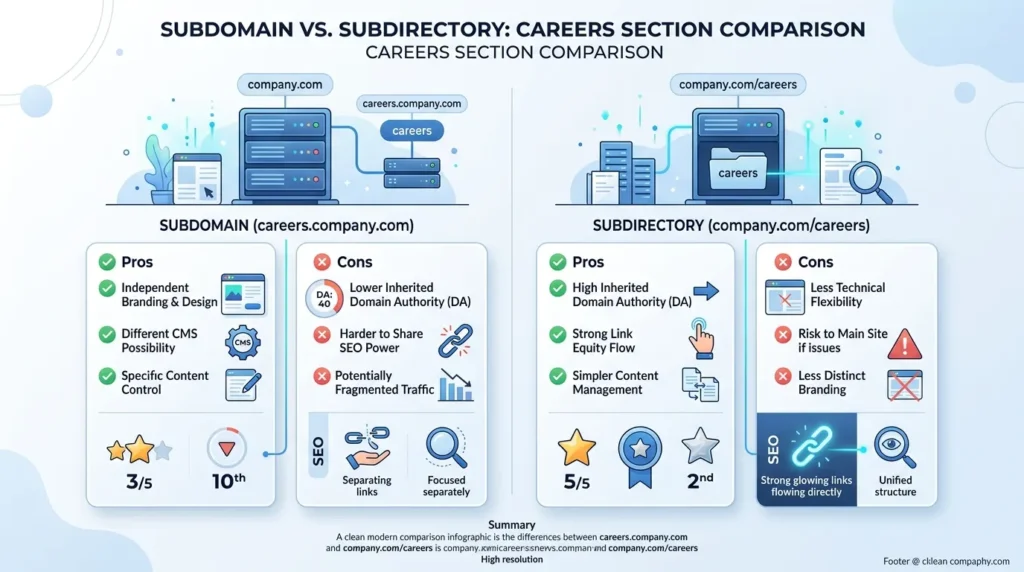
Companies often debate whether to use a subdomain or a folder for careers pages.
Career Subdomain Example
- careers.company.com
Career Folder Example
- company.com/careers
SEO Differences
Career folders often inherit the authority of the main domain more easily. Subdomains may require separate SEO optimization.
However, subdomains provide greater flexibility and easier ATS integration.
Which Structure Is Better?
There is no universal answer. Large organizations often prefer subdomains, while smaller businesses may benefit from folders.
Best Practices to Prevent This Error
Preventing the error is easier than fixing it later.
Monitor DNS Records Regularly
Regular audits help identify broken records before they become serious problems.
Use Wildcard SSL Certificates
Wildcard SSL certificates protect all subdomains under a domain.
Set Up Monitoring Tools
Website monitoring services can alert you when a subdomain becomes unavailable.
Keep ATS Integrations Updated
Outdated recruitment software integrations can create subdomain conflicts.
Document Domain Configurations
Maintain records of DNS settings, server configurations, and SSL certificates.
Configure Proper Redirects
Always create redirects when moving or deleting career pages.
Common Tools to Diagnose the Problem
Several tools can help diagnose subdomain issues.
nslookup
This command checks DNS records directly from the command line.
dig Command
The dig command provides detailed DNS information for troubleshooting.
WhatsMyDNS
This online tool checks DNS propagation globally.
MXToolbox
MXToolbox helps diagnose DNS and server-related issues.
SSL Checker Tools
SSL tools confirm whether certificates are valid and configured correctly.
Real Examples of Keine Karriere-Subdomain Gefunden
A company may redesign its website and forget to reconnect the careers subdomain. Users clicking old recruitment links then encounter the error.
Another common example involves expired SSL certificates. Even though the subdomain exists, browsers block access due to security concerns.
Some businesses also experience ATS integration failures where third-party recruitment software disconnects unexpectedly.
Final Thoughts
The “keine karriere-subdomain gefunden” error may seem technical, but it can create serious problems for businesses, developers, and job seekers alike. Whether the issue comes from DNS settings, SSL certificates, hosting misconfigurations, or broken redirects, identifying the root cause is essential.
By following the troubleshooting steps in this guide, you can fix the error efficiently and prevent it from happening again in the future. Regular DNS monitoring, proper SSL management, and reliable hosting configurations play a major role in maintaining a stable and accessible career subdomain.
For companies relying on online recruitment, ensuring that career pages work properly is critical for SEO, employer branding, and attracting qualified applicants.
Frequently Asked Questions
It means “no career subdomain found.” The system cannot locate the recruitment-related subdomain.
Yes. Missing or incorrect DNS records are among the most common causes.
Yes. Broken career pages can reduce traffic, damage indexing, and create poor user experience signals.
DNS propagation typically takes between a few minutes and 48 hours.
Yes. Expired or invalid SSL certificates may block access to the subdomain.
You can use browser tests, DNS lookup tools, or hosting dashboards.
Not always. Some businesses use folders instead of subdomains successfully.
Explore More:
What Is p13x13t? Meaning, Code & Full Guide
robyoc.online Explained: Is It Safe or a Scam?
What Is Young18gye? Meaning & Trend Explained