
 By Matthew Sullivan
Understanding legal terms around relationships can be confusing, especially when it comes to age of consent and criminal laws. One term that often raises questions is the “Romeo and Juliet law” Many people search this topic because they want to know whether certain relationships are legal and what the risks are. This guide explains everything in simple language so you can clearly understand how it works and why it exists.
What Is Romeo and Juliet Law? (Simple Explanation)
The Romeo and Juliet law refers to legal provisions that protect young couples who are close in age from harsh criminal penalties. It is often described as a “close-in-age exemption” to statutory rape laws.
In many legal systems, any sexual activity involving a minor can be treated as a serious offense, even if both individuals agreed to the relationship. The Romeo and Juliet law exists to prevent situations where teenagers or young adults face severe punishment for consensual relationships with someone close to their age.
In simple terms, it does not make underage relationships fully legal, but it reduces or removes penalties in certain situations where the age difference is small.
Why Does Romeo and Juliet Law Exist?
The main purpose of this law is fairness. Without it, the law could treat a teenage relationship the same way it treats exploitation or abuse, which are very different situations.
For example, imagine two teenagers in a relationship where one turns 18 slightly before the other. Without a legal exception, the older partner could face serious criminal charges, even though the relationship is consensual and normal for their age group.
The law helps avoid labeling young people as criminals or sex offenders in cases where there is no exploitation, force, or manipulation. It recognizes that not all relationships involving minors are harmful and that context matters.
How Does Romeo and Juliet Law Work?

Age Gap Rule (Most Important Section)
The most important part of the Romeo and Juliet law is the age gap rule. In most places, the law only applies when the difference in age between the two individuals is small.
Typically, this gap is between two to four years. For example, a relationship between a 17-year-old and a 19-year-old may be allowed under this law, depending on the jurisdiction.
However, if the age difference is large, such as between a minor and a much older adult, the law does not apply, and serious charges can still be filed.
Consent Requirement
Another key condition is consent. The relationship must be voluntary and agreed upon by both individuals.
If there is any form of pressure, coercion, or abuse involved, the Romeo and Juliet law does not apply. The law is only meant to protect genuine, consensual relationships between people who are close in age.
Age Limits
The law usually applies when one or both individuals are below the legal age of consent. The age of consent varies by location, but it is commonly between 16 and 18 years.
Even if both individuals are below this age, the law may still protect them if they meet the age gap and consent requirements.
What Romeo and Juliet Law Does NOT Allow
There are several important limitations to understand.
First: the law does not make underage sexual activity completely legal. It only provides a defense or reduces penalties in specific cases.
Second: it does not apply in situations involving force, manipulation, or authority. For example, if one person is a teacher, coach, or guardian, the law will not protect that relationship.
Third: it does not apply when there is a significant age difference. Relationships with large age gaps are still treated as serious offenses under the law.
Understanding these limits is crucial because many people mistakenly believe the law gives full permission, which is not true.
Does Romeo and Juliet Law Apply Everywhere?
The Romeo and Juliet law is not universal. Different countries and even different states or regions within a country may have their own rules.
In some places, there is no formal law with this name, but similar protections may exist under different legal provisions. In others, the rules are clearly defined with specific age gaps and conditions.
Because of this variation, it is important to check the specific laws in your location rather than assuming the same rules apply everywhere.
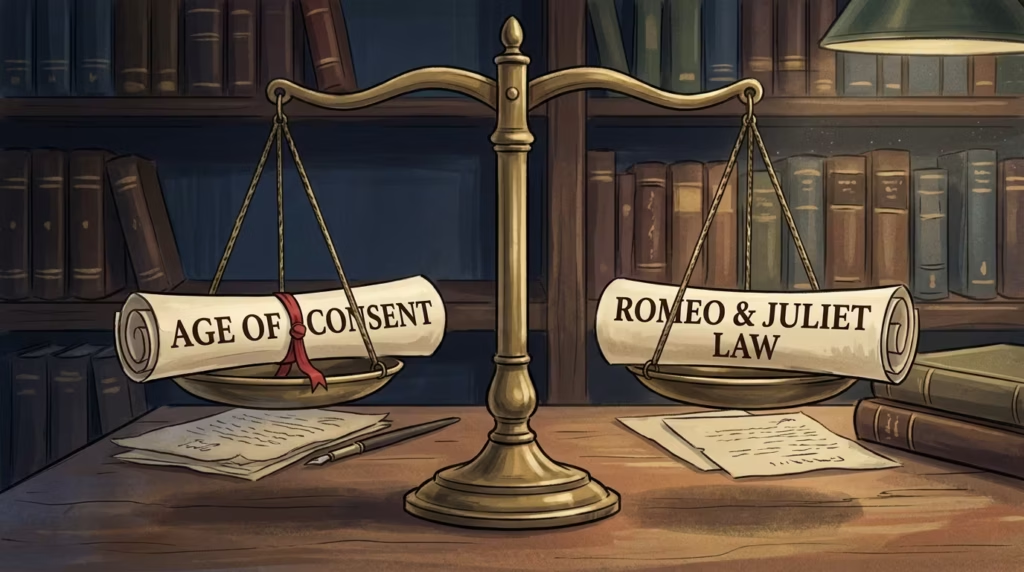
Romeo and Juliet Law vs Age of Consent
To understand this topic fully, you need to know the difference between the Romeo and Juliet law and the age of consent.
The age of consent is the minimum age at which a person is legally allowed to agree to sexual activity. This age varies by jurisdiction but is typically between 16 and 18.
The Romeo and Juliet law, on the other hand, is an exception to strict age of consent laws. It allows certain close-in-age relationships to avoid severe penalties even if one or both individuals are below the age of consent.
In short, the age of consent sets the rule, while the Romeo and Juliet law provides limited exceptions to that rule.
Real-Life Examples

Understanding examples can make this concept much clearer.
Example one involves a 17-year-old and a 19-year-old in a consensual relationship. In many places, this would fall under the Romeo and Juliet law because the age difference is small.
Example two could be a 15-year-old and an 18-year-old. Depending on local laws and the exact age gap allowed, this relationship might also be protected.
Example three involves a 15-year-old and a 25-year-old. In this case, the age gap is too large, and the Romeo and Juliet law would not apply. This situation would likely be treated as a serious criminal offense.
These examples show how the law focuses on both age difference and context.
Common Questions Romeo and Juliet law
One common question is whether the Romeo and Juliet law is legal everywhere. The answer is no. It depends on the country or region, and not all places have such laws.
Another question people ask is whether a 17-year-old can date a 20-year-old. The answer depends on local laws and whether the age gap falls within the allowed range.
People also want to know what age gap is allowed. In many cases, it is between two and four years, but this varies.
Some ask whether someone can still go to jail even if the law exists. The answer is yes, if the conditions of the law are not met, such as lack of consent or a large age difference.
Finally, many wonder whether this law applies outside the United States. Similar laws exist in some countries, but the rules are different everywhere.
Pros and Cons of Romeo and Juliet Laws
There are both advantages and disadvantages to these laws.
One major benefit is that they protect young people from harsh penalties. They recognize that not all relationships involving minors are harmful and help prevent unfair criminal records.
Another advantage is that they reduce the risk of young people being labeled as sex offenders for consensual relationships.
However, there are also downsides. The laws can be confusing, especially because they vary so much between locations.
Some people may misunderstand the law and assume it allows behavior that is actually illegal. This confusion can lead to serious legal consequences.
Key Takeaways
The Romeo and Juliet law is designed to protect young couples who are close in age from severe criminal penalties.
It is not a free pass for underage relationships, but rather a limited legal exception.
The most important factors are age difference, consent, and local laws.
Because rules vary widely, it is always important to check the specific laws in your area.
Final Thoughts
The Romeo and Juliet law plays an important role in modern legal systems by balancing protection and fairness. It helps ensure that consensual teenage relationships are not treated the same as exploitation or abuse.
At the same time, it has strict limits and does not apply in many serious situations. Understanding these boundaries is essential for staying informed and avoiding legal trouble.
If you are ever unsure about how the law applies in your situation, it is best to consult a qualified legal professional or review official local regulations.
Explore More:
Is CNLawBlog Worth It? Honest 2026 Review