
 By Matthew Sullivan
Florida tint laws are not just about style, they directly affect your safety, visibility, and legal compliance on the road. Many drivers install window tint to reduce heat and glare, but going too dark can quickly lead to fines or even a failed vehicle inspection. Under Florida Statute 316.2953, the state clearly defines how much tint is allowed on each window of your vehicle. In this guide, you will learn the exact legal limits, how VLT works, what penalties you might face, and how to stay fully compliant in 2026.
What Are Florida Tint Laws?
Florida tint laws are regulations that control how dark or reflective your vehicle’s windows can be. These laws exist to ensure drivers can see clearly and that law enforcement officers can safely view the inside of a vehicle during traffic stops. The rules apply to all vehicles registered in Florida and are enforced statewide.
The law specifically focuses on light transmission levels, reflection limits, and restricted colors. If your tint does not meet these requirements, it is considered illegal, even if it was installed by a professional. This is why understanding the law before tinting your windows is essential.
What Is VLT (Visible Light Transmission)?

VLT, or Visible Light Transmission, is the percentage of light that passes through your window tint. It is the most important factor in determining whether your tint is legal.
A higher VLT percentage means more light passes through, resulting in a lighter tint. A lower percentage means less light passes through, making the tint darker. For example, a 70 percent VLT allows most light in and appears very light, while a 20 percent tint is much darker. A 5 percent tint, often called limo tint, is extremely dark and usually illegal for most windows in Florida.
Understanding VLT helps you make better decisions when choosing tint because legality depends on these percentages, not just how dark the tint looks to your eyes.
Florida Tint Laws 2026 (Legal Limits by Vehicle)
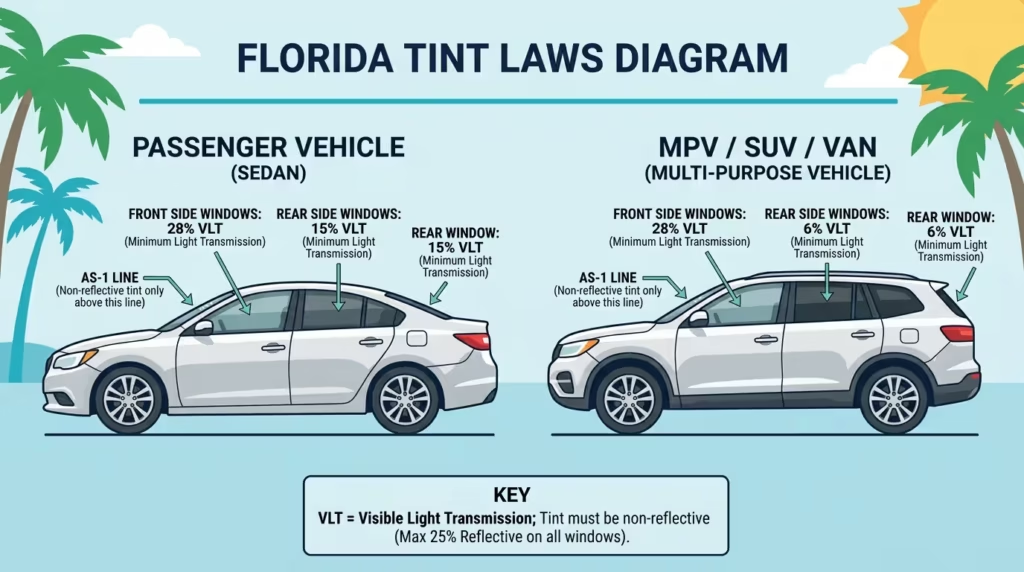
Sedans (Cars)
For standard passenger cars, Florida law sets clear limits for each window.
The windshield can only have non reflective tint above the AS-1 line, which is the top portion of the windshield. No tint is allowed below that line unless you have a medical exemption.
Front side windows must allow more than 28 percent of light to pass through. This means the tint cannot be darker than 28 percent VLT.
Rear side windows must allow more than 15 percent of light through. This allows for slightly darker tint compared to the front.
The rear window also must allow more than 15 percent of light in. These limits are designed to balance privacy with safety.
SUVs, Vans, and Trucks
Larger vehicles such as SUVs and trucks have slightly more relaxed rules for rear windows.
Front side windows still must allow more than 28 percent of light through, just like sedans.
Rear side windows and the rear window can be much darker, allowing as low as 6 percent VLT. This gives drivers more flexibility for privacy and heat protection in larger vehicles.
The windshield rule remains the same, only allowing tint above the AS-1 line.
Florida Tint Laws Comparison Table
For better understanding, here is a simplified comparison.
Sedans have stricter rear window limits at 15 percent VLT, while SUVs and trucks can go as dark as 6 percent on rear windows. Front windows remain the same across all vehicle types at 28 percent VLT. This difference is important and often misunderstood by drivers.
Florida Tint Reflection & Color Laws
Florida law also regulates how reflective your tint can be. Reflective tint can reduce glare and heat, but too much reflection can be dangerous.
Front side windows cannot be more than 25 percent reflective. Rear windows cannot exceed 35 percent reflection.
Certain colors are completely prohibited. You cannot use red, blue, or amber tint on your vehicle windows. These colors are restricted because they can interfere with visibility and may resemble emergency vehicle lighting.
Windshield Tint Rules (AS-1 Line Explained)
The AS-1 line is a marking found on most vehicle windshields. It indicates the upper portion where tint is allowed.
In Florida, you can only apply non reflective tint above this line. This area is typically about five to six inches from the top of the windshield. Tinting below this line is illegal because it can obstruct the driver’s view of the road.
This rule is strictly enforced, and many drivers get fined simply for applying tint too low on the windshield.
Medical Exemptions for Tint in Florida
Florida allows medical exemptions for individuals with certain health conditions. People with issues like extreme light sensitivity or skin disorders may qualify for darker tint than normally allowed.
To get a medical exemption, you must apply through the proper state process and provide documentation from a licensed physician. Once approved, you may legally use darker tint, but you must carry proof of exemption while driving.
Florida Tint Laws for SUVs vs Sedans (Key Differences)
One of the biggest differences in Florida tint laws is between sedans and larger vehicles.
Sedans have stricter limits on rear windows, requiring at least 15 percent VLT. SUVs and trucks can go much darker on rear windows, down to 6 percent VLT. This difference exists because larger vehicles have different visibility and design considerations.
Many drivers mistakenly apply SUV tint standards to sedans, which can result in fines.
Penalties for Illegal Tint in Florida
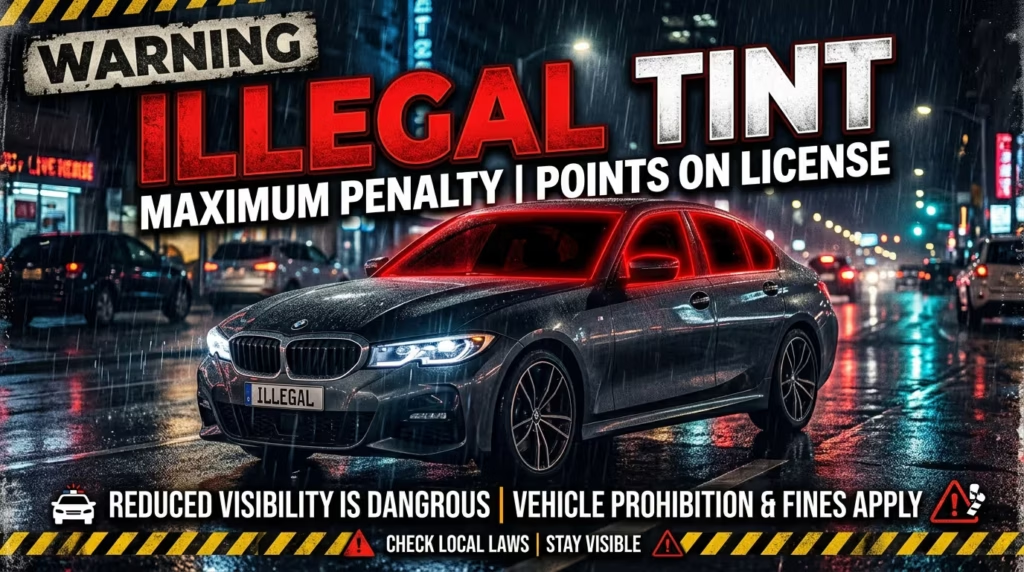
Driving with illegal tint in Florida is considered a non criminal traffic violation. While it may not seem serious, it can still lead to fines and inconvenience.
You may receive a ticket and be required to remove or replace the illegal tint. In some cases, you might get a fix it ticket, which means you must correct the issue within a certain time frame.
Law enforcement officers use special devices called VLT meters to measure how much light passes through your windows. If your tint falls below the legal limit, you can be cited immediately.
3 Percent Tint Law Tolerance Rule
Florida law allows a small margin of error when measuring tint. This is known as the 3 percent tolerance rule.
For example, if the legal limit is 28 percent VLT, a reading slightly below that, such as 25 percent, may still be considered acceptable. However, this tolerance should not be relied upon.
It is always safer to choose tint that clearly meets or exceeds legal limits to avoid any issues during inspection or traffic stops.
How to Choose Legal Tint in Florida
Choosing the right tint involves more than just picking a shade you like. You need to ensure it complies with the law while still providing the benefits you want.
A common legal setup for sedans is 28 percent on front windows and 15 percent on rear windows. This combination provides a good balance between privacy and legality.
Always work with a professional installer who understands Florida laws. Make sure they provide a certification sticker, which is required and usually placed on the driver’s side door jamb.
Before finalizing your tint, ask for the exact VLT percentage and confirm it meets legal standards.
Final Thoughts
Florida tint laws in 2026 are clear but often misunderstood. The key to staying compliant is understanding VLT percentages, knowing the differences between vehicle types, and following reflection and color restrictions. By adhering to the rules outlined in Florida Statute 316.2953, you can enjoy the benefits of window tint without risking fines or legal trouble.
If you plan to tint your vehicle, take the time to choose the correct percentages and work with a trusted installer. Staying informed is the best way to ensure your vehicle remains both stylish and legal on Florida roads.
FAQs About Florida Tint Laws 2026
No, 5 percent tint is generally illegal for most windows unless you have a medical exemption or it is applied to certain rear windows of specific vehicle types.
For front side windows, the darkest legal tint is 28 percent VLT. Rear windows can go as dark as 15 percent for sedans and 6 percent for SUVs.v
Yes, if your tint appears too dark, officers can stop you and test it using a VLT meter.
Only above the AS-1 line and it must be non reflective.
No, 20 percent tint is illegal for front windows in Florida because it is darker than the 28 percent requirement.
Explore More:
Is CNLawBlog Worth It? Honest 2026 Review
What Is Romeo and Juliet Law? Full Guide 2026