
 By Matthew Sullivan
Cloud computing is no longer a future concept, it is the backbone of modern technology in 2026. From streaming your favorite shows to running large-scale business applications, everything today relies on the cloud. If you have come across the term “droven.io cloud computing guide,” you are likely looking for a simple and complete explanation of how cloud computing works and why it matters.
This article breaks everything down in a clear, beginner-friendly way. Whether you are a student, a developer, or someone planning to enter the tech field, this guide will help you understand cloud computing step by step, without confusion.
What Is Droven.io Cloud Computing Guide?
The droven.io cloud computing guide is an educational resource that explains cloud technology in a structured and practical way. It focuses on helping beginners understand complex concepts while also providing insights for professionals who want to stay updated with modern trends.
This guide typically covers the fundamentals of cloud computing, different service models, real-world applications, and how businesses are using cloud technology to grow faster. It also highlights emerging trends such as artificial intelligence integration and automation, which are shaping the future of cloud computing.
One of the reasons this guide is gaining popularity in 2026 is because it simplifies technical topics and presents them in an easy-to-understand format.
What Is Cloud Computing? Explained Simply
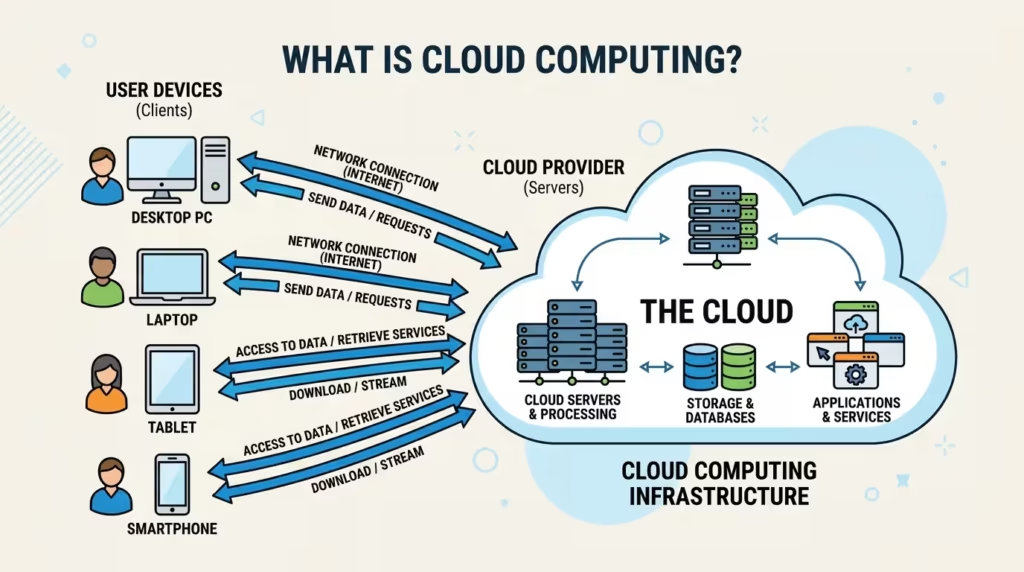
Cloud computing means using the internet to access computing services like storage, software, and processing power instead of relying on your personal computer or local servers.
For example, when you use Google Drive to store files or watch videos on Netflix, you are using cloud computing. Your data is not stored on your device, it is stored on remote servers that you can access anytime through the internet.
Cloud computing works through large data centers that store and manage information. These data centers are maintained by companies that provide cloud services, allowing users to access powerful resources without needing expensive hardware.
Core Cloud Computing Models
IaaS (Infrastructure as a Service)
Infrastructure as a Service provides basic computing resources like virtual machines, storage, and networks. It is ideal for developers and businesses that want full control over their systems without buying physical hardware.
With IaaS, you can build and manage your own applications while the cloud provider handles the infrastructure.
PaaS (Platform as a Service)
Platform as a Service offers a ready-to-use environment for developers to build and deploy applications. It removes the need to manage servers or operating systems.
This makes development faster and more efficient, especially for teams working on web and mobile applications.
SaaS (Software as a Service)
Software as a Service delivers applications over the internet. Users can access software directly through a browser without installing anything.
Examples include Gmail, Zoom, and online office tools. SaaS is the most commonly used cloud model because it is simple and convenient.
Types of Cloud Deployment Models
Cloud computing is not limited to one type of setup. There are different deployment models based on user needs.
Public cloud is the most common type where services are shared among multiple users. It is cost-effective and easy to use.
Private cloud is designed for a single organization. It offers better control and security but can be more expensive.
Hybrid cloud combines both public and private clouds. It allows businesses to use the benefits of both systems.
Community cloud is shared among organizations with similar requirements, such as government or healthcare sectors.
Key Features of Droven.io Cloud Guide
The droven.io cloud computing guide stands out because of its structured learning approach. It is designed for both beginners and advanced users, making it a versatile resource.
It provides step-by-step explanations, real-world examples, and practical insights that help users understand how cloud computing works in real situations.
Another important feature is its focus on modern technologies like artificial intelligence and automation. This ensures that readers are not just learning basics but also understanding future trends.
Benefits of Cloud Computing in 2026
Cloud computing offers several advantages that make it essential in today’s digital world.
One of the biggest benefits is cost savings. Businesses do not need to invest in expensive hardware or maintenance. They only pay for what they use.
Scalability is another major advantage. Companies can easily increase or decrease resources based on demand without any downtime.
Cloud computing also enables remote access, allowing users to work from anywhere. This has become especially important with the rise of remote work.
Security has also improved significantly. Cloud providers use advanced security measures to protect data, making it safer than traditional systems in many cases.
Cloud and AI Integration
In 2026, cloud computing and artificial intelligence are closely connected. Cloud platforms provide the computing power needed to train and run AI models.
AI tools rely on cloud infrastructure to process large amounts of data quickly. This combination is used in applications like chatbots, recommendation systems, and automated decision-making.
Businesses are increasingly using cloud-based AI solutions to improve efficiency and gain insights from data.
Real-World Use Cases
Cloud computing is used in almost every industry today.
Businesses use it to store data, run applications, and manage operations more efficiently. Startups benefit from low costs and scalability, allowing them to grow without heavy investment.
Students use cloud platforms for learning, accessing online courses, and storing academic work.
Developers use cloud services to build, test, and deploy applications quickly without worrying about infrastructure.
Cloud Architecture Basics
Cloud architecture is built on key principles that ensure systems are efficient and reliable.
Security is essential to protect data and prevent unauthorized access. Reliability ensures that services remain available without interruptions.
Performance focuses on delivering fast and efficient services. Cost optimization helps users manage expenses effectively.
Operational excellence ensures that systems are continuously improved and maintained.
These pillars form the foundation of modern cloud systems.
Challenges of Cloud Computing
Despite its many benefits, cloud computing also has some challenges.
Data security concerns remain a major issue, especially for sensitive information. While cloud providers offer strong security, users must also follow best practices.
Hidden costs can occur if resources are not managed properly. It is important to monitor usage to avoid unexpected expenses.
Cloud computing also depends heavily on internet connectivity. Without a stable connection, access to services can be disrupted.
Another challenge is limited control over infrastructure, especially in shared environments.
Step-by-Step Learning Path
If you want to learn cloud computing effectively, following a structured path is important.
-Start by understanding the basics of cloud computing and how it works. Learn about the different service models like IaaS, PaaS and SaaS.
-Next, explore popular cloud platforms and practice using them. Hands-on experience is essential for building skills.
-After that, work on small projects to apply your knowledge. This will help you understand real-world applications.
-Finally, continue learning advanced topics like cloud security, DevOps, and AI integration to stay updated.
Future of Cloud Computing (2026 and Beyond)
The future of cloud computing looks promising with rapid advancements in technology.
Artificial intelligence will continue to grow alongside cloud computing, creating more powerful and intelligent systems.
Edge computing is also gaining attention, allowing data processing closer to the source for faster performance.
Multi-cloud strategies are becoming popular as businesses use multiple providers to improve flexibility and reduce risk.
Automation will play a bigger role, reducing manual work and improving efficiency.
Conclusion
The droven.io cloud computing guide provides a simple yet comprehensive way to understand cloud technology in 2026. It covers everything from basic concepts to advanced trends, making it suitable for learners at all levels.
Cloud computing is an essential skill in today’s digital world, and learning it can open many opportunities. By following a structured approach and staying updated with new trends, anyone can build a strong foundation in cloud computing.
If you are just starting out, focus on understanding the basics and gradually move toward practical applications. With time and practice, cloud computing will become easier and more valuable in your career journey.
Explore More:
Who Called Me from 9253612736? Scam or Safe?
Application Mobile DualMedia Explained Simply (2026)
What Is Feedbuzzard Code? Full Beginner Guide 2026